Press play to watch/listen to “MS and Employment: Should the Government Be Pushing People with MS Back Into Work?” or scroll to continue reading.
The MS and Work Debate: Help or Harm?
For many living with Multiple Sclerosis (MS), employment is a deeply personal and often complex issue. The UK government has made it a priority to encourage people with long-term health conditions to stay in or return to work, and MS is frequently part of that conversation.
But this has sparked debate within the MS and wider disability community. Some see these efforts as steps toward independence and inclusion. Others fear it’s a veiled attempt to reduce benefit claims, even if it means compromising the well-being of those affected.
As a health and advocacy platform, I believe in empowering choice. Let’s look at the government’s approach, both for and against.
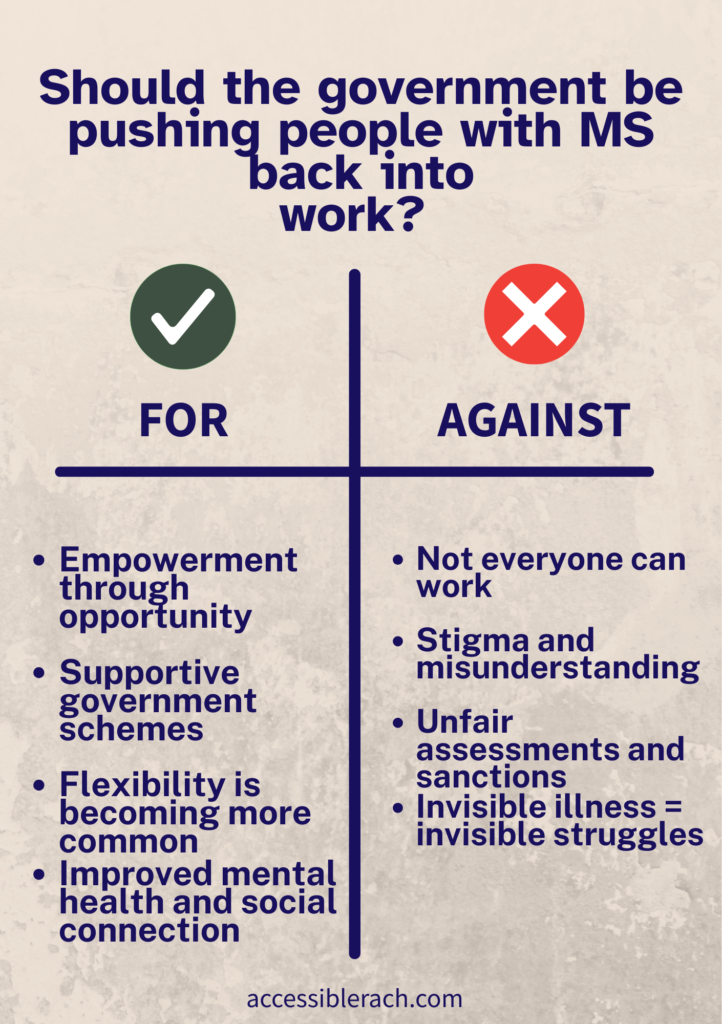
👍 The Case For Encouraging Work for People with MS
1. Empowerment Through Opportunity
Work isn’t just about earning money. For many people with MS, it’s about retaining a sense of identity, purpose, and contribution. With the right accommodations, returning to work can be a confidence boost, not a burden.
2. Supportive Government Schemes
Programs like Access to Work offer funding for equipment, support workers, and transport, helping people manage the costs of disability and stay employed. Other initiatives, such as Disability Confident Employers, promote inclusive hiring practices.
3. Flexibility is Becoming More Common
Post-pandemic work culture has changed. Remote work, flexible hours, job-sharing, and phased returns are more accessible than ever, allowing people with MS to manage their symptoms while staying connected professionally.
4. Improved Mental Health and Social Connection
Work can offer a routine, a sense of normalcy, and valuable social interaction, all of which are essential for mental health, especially for those navigating a chronic illness.
👎 The Case Against Government Pressure to Work
1. Not Everyone Can Work
MS is an unpredictable condition. Fatigue, pain, and cognitive issues can fluctuate daily. Forcing people into employment when they’re not physically or mentally ready can be harmful and even trigger relapses.
2. Stigma and Misunderstanding
Even with inclusive policies, workplace discrimination still exists. Some employers don’t understand MS or aren’t prepared to make accommodations. This makes the return to work more stressful than supportive.
3. Unfair Assessments and Sanctions
Many people with MS report facing pressure from benefits assessments like PIP or ESA. When support is reduced based on flawed evaluations, people are left choosing between health and financial survival.
4. Invisible Illness = Invisible Struggles
One of the hardest parts of MS is that many symptoms are invisible. Just because someone “looks fine” doesn’t mean they’re well enough to work, yet some policies still use outdated, surface-level criteria.
What’s the Middle Ground?
Encouraging employment can be empowering — but only if it’s built on the following values:
- Choice: The person with MS should always have control over their work decisions.
- Support: Systems must be flexible and responsive to individual needs.
- Education: Employers and policymakers must understand what living with MS means.
- Security: No one should lose vital financial support because they tried to work.
Final Thoughts: Advocacy First, Always
People with MS are resilient, skilled, and valuable members of society, whether they’re working, volunteering, caregiving, or simply surviving. The government’s role should be to support, not pressure. Empower, not punish. Offer choices, not ultimatums.
I believe that any return-to-work effort should be person-led, not policy-led.
💬 What’s Your Experience?
I want to hear from you. Have you faced challenges returning to work with MS? Have government policies helped or hurt your journey? Share your story in the comments or contact me via social media.
🧠 Need Support?
Check out Wheelie Links for links to MS charities, legal aid, employment rights, and community groups.
Rach xx
Latest Posts
- 🚨 Malicious Fraud Reporting to the DWP: Why It Must End
 Press play to watch/listen to “Malicious Fraud Reporting to the DWP: Why It Must End.” Published: August 2025By: Rachael | Wheelie MS Advocate What Is Malicious Fraud Reporting? Malicious fraud reporting happens when someone makes a false or exaggerated allegation of benefit fraud to the Department for Work and Pensions (DWP). Instead of targeting genuine…
 - I Reported Online Disability Hate. The Police Said They Couldn’t Help.
 ⚠️ Content Warning: This post discusses ableism, online abuse, and includes references to ableist slurs such as “cripple.” It may be distressing to some readers. Please take care. Press play to watch/listen to “I Reported Online Disability Hate. The Police Said They Couldn’t Help.” Published: August 2025By: Rachael | Wheelie MS Advocate Every Time I…
 - The Truth Behind the ‘Better Off on Benefits’ Lie
 Press play to watch/listen to “The Truth Behind the ‘Better Off on Benefits’ Lie” Published: July 2025By: Rachael | Wheelie MS Advocate Another Harmful Headline – But the Damage Is Real This week, the Daily Mail ran yet another inflammatory headline claiming that people on sickness benefits are now “better off” than minimum wage workers,…